
Every principle behind the NeuroVIRZ
technology is supported by
credible science
We believe in transparency and integrity and is proud to share
the research that guides and inspires our work.
The Science behind the NeuroVIZR
When your brain is exposed to carefully designed light and sound, it naturally responds by creating new neural pathways. This process can help improve focus, relaxation, and creativity.
The NeuroVIZR uses advanced light and sound stimulation based on proven scientific principles to activate your brain, support healthier mental states, and promote long-term cognitive development.
The NeuroVIZR uses advanced light and sound stimulation based on proven scientific principles to activate your brain, support healthier mental states, and promote long-term cognitive development.
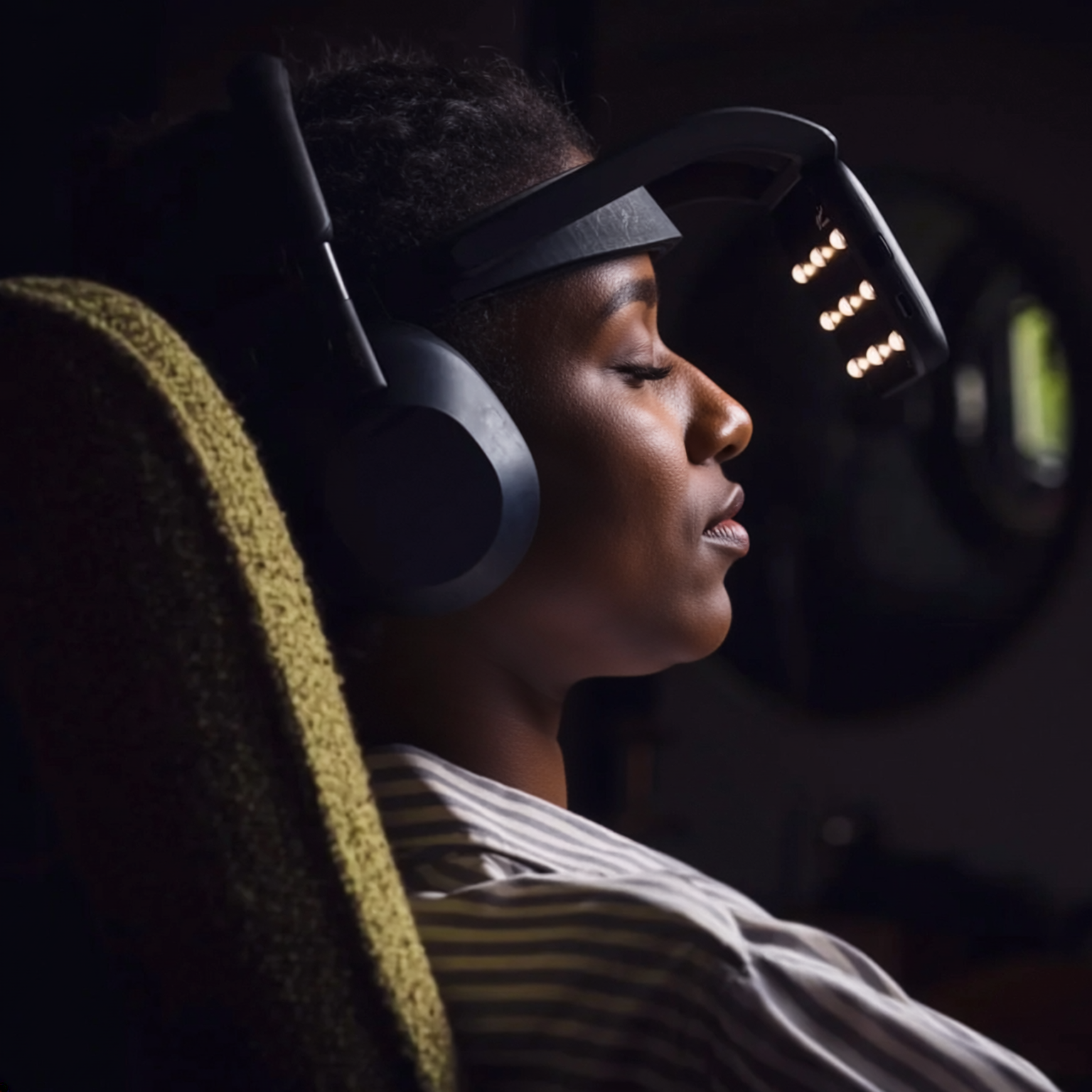
40 Hertz Light Stimulation and Brainwave Entrainment
40 hertz light stimulation is closely linked to brainwave entrainment, a process where external light and sound rhythms synchronize with your brainwaves. This synchronization helps enhance cognitive functions such as focus, memory, and mental clarity, creating a foundation for neurocognitive training.
Stroboscopic Light Stimulation for Brain Activation
Stroboscopic light stimulation boosts brain activity by delivering rhythmic flashes of light that stimulate neural pathways. This technique heightens mental clarity and improves focus, pushing your brain into higher states of cognitive performance and accelerating the neuroplasticity of the brain.
Encouraging Neuroplasticity Through Synchronization
By aligning brainwaves with external stimuli, light and sound stimulation helps your brain adapt and rewire itself. This synchronization not only enhances short-term focus and cognitive performance but also promotes neuroplasticity, allowing your brain to build and strengthen neural connections for long-term mental flexibility and resilience.
The Proven Neuroscience Behind NeuroVIZR
Explore the External Research That Powers NeuroVIZR
Neural Dynamics of Stroboscopic Stimulation
Dynamic Brains and the Changing Rules of Neuroplasticity: Implications for Learning and Recovery –
by Bryan Kolb and Robbin Gibb (2017).
Exploring the Role of Neuroplasticity in Development, Aging, and Disease –
by Sushmita Panja and Anirban Dutta (2023)
This article examines how neuroplasticity influences brain function across the lifespan and its implications for neurological diseases, highlighting the brain’s capacity for reorganization in response to various factors.